


ClientsWho we build for
Your site is a template. Your process is a spreadsheet and three tabs open in your email. You need a real app — something people can actually use — and you don't know who to trust with it. A freelancer who might vanish. An agency that quotes six months and a number with too many zeros.
We scope your idea into something buildable, tell you honestly what it'll take, and build it in weeks, not quarters. No jargon, no disappearing act.
See how we scope a project →A client wants a booking system, not just a landing page. Another wants their CRM talked to their website. You could hire a developer — expensive for work that isn't steady. You could use a freelancer — until they go quiet in week three and you're the one explaining that to your client.
We work behind your agency as the dev team you don't have to manage. You stay the point of contact. We stay invisible to your client, or visible — your call. Same PM discipline you already run projects on, just pointed at code instead of copy.
See how we communicate & keep it white-label →ServicesWhat We Build: Web Apps, MVP Development & Integrations
Before anyone writes code, we map your users, workflows, and constraints — and turn your idea into a written scope with a technical approach and a fixed quote. It's the phase most budget disasters trace back to skipping.
Web apps, MVPs, integrations, and custom-functionality websites all go through the same door: scope first, build second.
Our two-week Scoping Sprint →Booking systems, internal dashboards, client portals, first versions built to test real demand — and the integrations that make your CRM, payments, and website finally talk to each other.
If you're running your operations through spreadsheets and five apps that don't talk to each other, this is what replaces that.
Book a 20-minute scoping callHow a project actually goes
01. Scoping call
20–30 minutes, free. You tell us what you're trying to build and why. We ask the questions that usually get skipped and cause problems in week six.
Book the call02. Scoping Sprint
Two weeks, $3,500 flat. You get the scope, the architecture, the delivery plan, and a fixed-price quote for the full build — everything a dev team needs, whether that team ends up being us or not.
See the Scoping Sprint03. Build in sprints
A 30-minute demo every week and a written Friday update — what shipped, what's next, what's blocked. Three invoices: 40% at kickoff, 40% at the mid-build demo, 20% at handoff.
04. Delivery & handover
The code's been in your repo all along — there's no big reveal at the end. We hand over documentation, access, and a walkthrough, and that's it: it's yours.
05. Support
Bugs happen after launch, not just before. We stick around for a defined support window so you're not on your own the day we ship.
What We've Shipped
Real budgets, real timelines, live in production. We publish our cases the way we'd want to read them.

How much does a Scoping Sprint cost?
Not ready to commit to a full build with a team you just met? Fair. Start with two weeks that de-risk everything after them.
Scoping call
You tell us what you're trying to build and why. We ask the questions that usually get skipped — and give you an honest read on whether we're the right team for it.
Scoping Sprint
We turn your idea into a written scope, an architecture outline, a delivery plan, and a fixed-price quote — everything a dev team needs, whether that team is us or not.
If the Sprint doesn't end with the full deliverables list, you get all of your $3,500 back — tell us within 7 days of delivery. The documents are yours to keep either way.
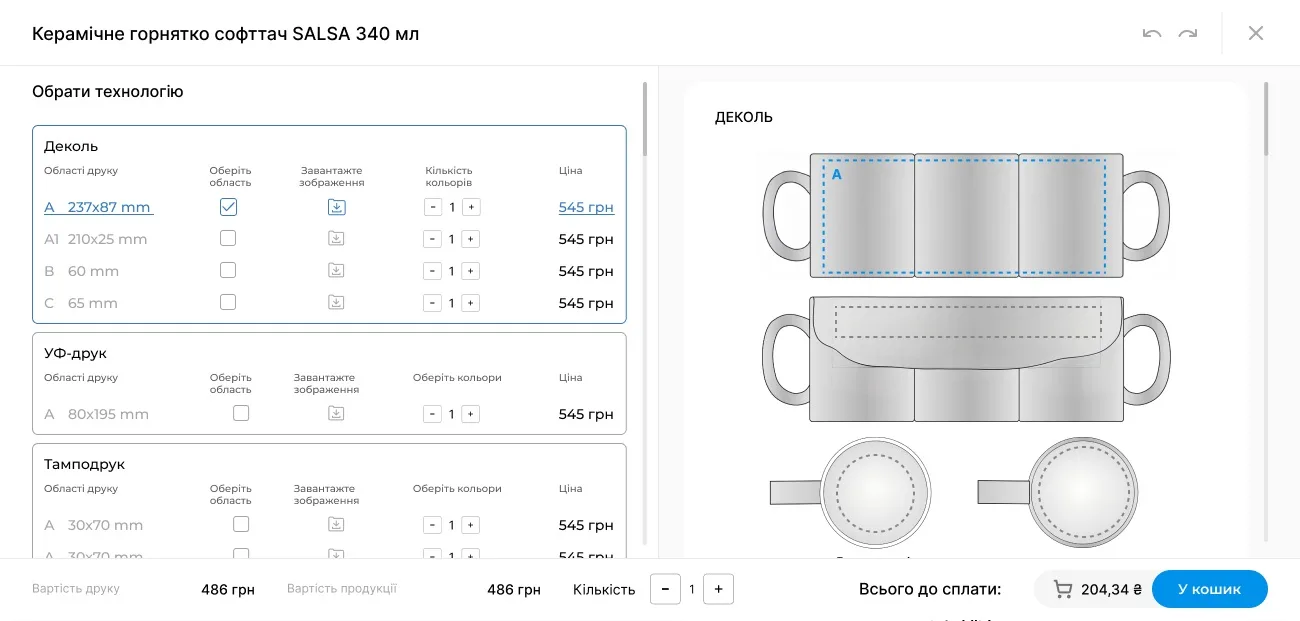
The same fixed-scope, fixed-price approach that shipped ENEY's pricing engine — $7,000–12,000, two months, live in production today.
PaymentHow you pay
One fixed price, set after the Scoping Sprint. ACH to a US bank account, W-8BEN provided, every invoice net-7. The price doesn't change unless you change the scope.
Your $3,500 Scoping Sprint fee counts toward this invoice.
You pay for progress you've already seen in weekly demos.
Docs, access, walkthrough — then it's yours.
What you keep: everything
The code lives in your GitHub account from day one — you watch it grow, you never wait for a handover. Documentation, designs, infrastructure access, the scope itself: all yours. No equity, no lock-in, no hostage code. You can hand the repo to any other developer at any time — we just intend to make sure you won't want to.
How we work with you
Tatyana runs your project and every call — one person, start to finish. Volodymyr, the agency owner, joins the kickoff and is one message away if anything needs escalating.


We're in Lviv, Ukraine. That means we're live and available 9 AM–12 PM Eastern every working day — your morning is our afternoon. On Pacific time, we schedule calls between 8 and 10 AM PT and handle the rest async, with answers waiting in your channel by the time you're back at your desk. We won't pretend to be a US-hours team; we will be reachable when it matters.
HonestlyWhy work with a practice this new
Let's be straight about it: we don't have a decade of software case studies — what we have is one, shipped and running in production, plus 160+ agency projects delivered over 13 years and a team with 10+ years each in digital.
That's real, and it's exactly why we know what reliable delivery looks like. It's not ten case studies, and we're not going to pretend it is.
What that combination buys you, right now:
We're not staffing your project with whoever's on the bench this week. Early clients get the people building this practice, directly — not account managers relaying messages to a team you never meet.
Years of client work — 160+ projects of it — taught us what happens when you miss a date; we built our whole agency on not doing that. That habit doesn't reset because the deliverable changed from a website to an app.
One flat price for the Scoping Sprint, one clear payment structure for the build — no "let's hop on a call to discuss budget." You'll know the numbers before you talk to us.
We publish our case with a real budget, a real timeline, and a real stack — not "trust us," a link. ENEY's pricing engine is live right now; open the site and see exactly what we built.
If you need a vendor with ten years of software case studies, we're not that — yet. If you want a team that's honest about that, works like the reliable agency it already is, and takes your project as seriously as its own reputation, talk to us.
Us vs. a freelancer vs. a traditional agency
FAQQuestions we get before the first call
Answering the ones we hear most often.
You only have one dev case — is that a real track record?
One case, published in full — not a decade of them, but a real one: a live, real-time pricing engine running in production for ENEY, a Ukrainian promotional-products distributor, handling 4,367 products across 9 decoration methods, delivered in two months for $7,000–12,000 — in line with the $3,500 Scoping Sprint on this page. It's backed by 13 years of client-accountable agency delivery: 160+ projects. This is the case we have; go look at it.
Is working with a Ukrainian team risky right now?
Guild of Marketing has been delivering for 13 years and kept working through everything the last few years have brought — as a remote-first team with backup power and connectivity redundancy. We understand why you'd ask, and we're glad to walk through our setup in detail on a call. Business continuity hasn't been a slide in a pitch deck for us — it's been tested daily.
Why not just hire a freelancer on Upwork? It's cheaper.
It can be, upfront. The real cost usually shows up later: no backup if they go dark, no QA layer, no one to catch scope creep before it becomes a rewrite. We run projects as a team with a single point of accountability, so the work doesn't stall if one person disappears. You're paying for the process, not just the hours.
What's your tech stack?
We choose the stack per project and name it before the contract is signed. We work with widely used, well-supported tools, so any team can pick the code up after us. If you have a specific stack requirement, tell us on the scoping call and we will tell you whether it fits.
What happens if we change the scope mid-build?
Nothing changes without a written quote first. If you want to add or change scope mid-build, we write up the change — what it affects and what it costs — before we touch any code. No surprise invoices, no silent scope creep eating your timeline.
We're an agency — can this stay white-label?
Yes, on request. We can work inside your PM tool — your Asana, ClickUp, whatever you run — under your project name, so your client sees your agency, not us. NDA available on request before we look at any project details.
How do payments actually work from the US?
Standard invoice, paid by ACH to a US bank account — nothing exotic. We invoice net-7, provide a W-8BEN for your records, and split payment 40/40/20 across kickoff, mid-build demo, and handoff. No wire transfers to Ukraine, no cross-border payment gymnastics.
How fast can we actually start?
A scoping call within a few days of reaching out. From there, most Scoping Sprint slots open within one to two weeks, and the build starts right after — with a price already fixed, so there's no separate negotiation to restart.
Have you built for US clients specifically?
Not yet, publicly — our shipped case is for a Ukrainian client (ENEY). The engineering problem — real-time, configurable pricing logic — doesn't change with geography. What would be new for us is the specific US combination: payment rails, tax handling, platforms like Shopify or WooCommerce instead of OpenCart. If that's a fit question for your project, we'll say so plainly on the scoping call, not after you've signed.