
CRM integration starts at $300. We show the exact number of hours before the work starts.
You need an integration when someone moves the same data by hand: orders from the website into the CRM, stock from the accounting system onto the website, prices from a price list into product pages. Every such transfer costs manager hours and creates errors customers notice first: the item is out of stock, but the website says it is available.
Business process automation starts in the same place: we look at where data is duplicated and connect the systems so they exchange it themselves.
What we connect
Four types of work come up most often:
Internal automation is a separate line of work: alerts about new requests, regular reports, data passed between services.
An integration or an existing plugin? We will tell you in 20 minutes
Leave your number — we will call back within one business day, look at the systems you run and say whether a ready-made solution exists or how many hours the work will take.
When an integration is not worth it
If there are few orders and a manager keeps up by hand, automation will not pay off: the development hours cost more than the time saved. If the database is a mess — one item written three different ways — the catalogue gets cleaned up first, otherwise the errors simply spread across systems. And for common pairings there is often a ready plugin, and we will say so instead of writing our own.



How we work
01.Call
On the call we find out which systems need to be connected and what data has to move between them.
02.Estimate
Then we count the hours and name the figure before the work starts. If the systems have no API, we say so straight away and suggest scheduled file exchange.
03.Development and testing
After development we test the exchange on sample data — orders, returns, price changes.
04.Launch and follow-up
For the first weeks after launch we watch how everything behaves on real data and fix whatever surfaces.
What it costs
CRM integration starts at $300, depending on the system and on what data has to move. Hours are counted at a developer rate of $24. Two-way sync with an accounting system costs more than a one-way export: stock, prices and statuses have to be reconciled in both directions, with rules for what happens when they disagree. We count the cost in hours at agency rates and show the figure before the start.
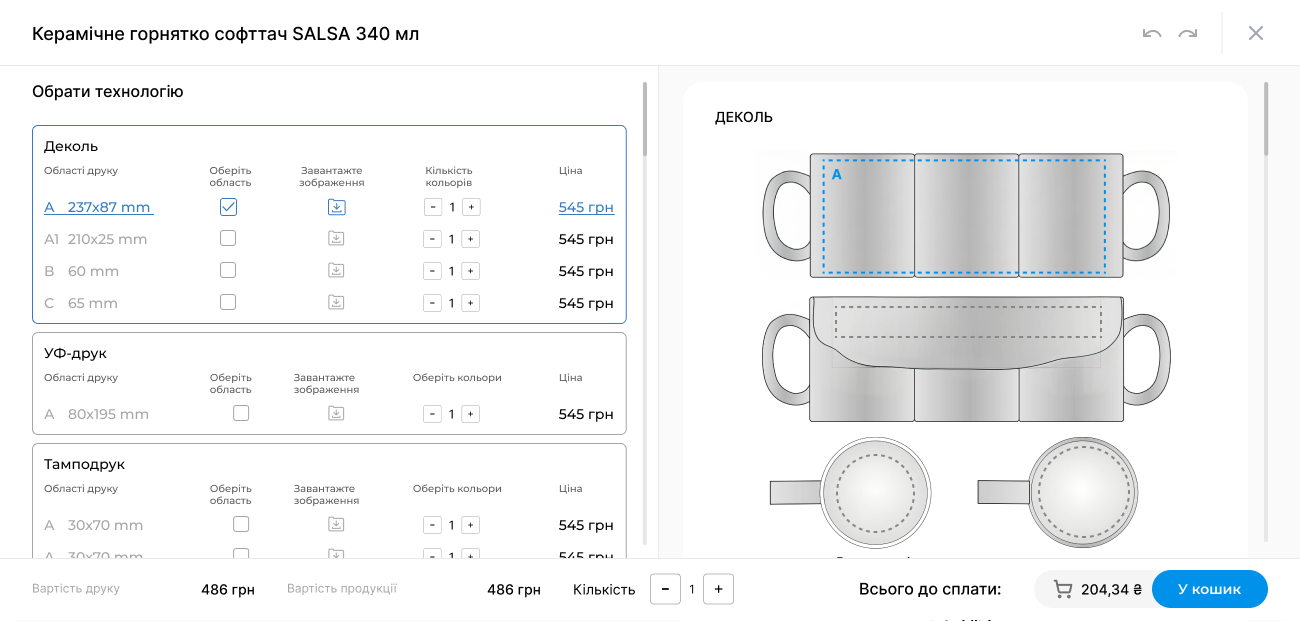
A pricing module inside the client’s store
Questions we hear most often
We run an old accounting system. Is an integration possible?
It depends on whether it can export data. We will look at it on the call: if there is no API, we will discuss scheduled file exchange.
Who maintains the integration after launch?
We do for the first weeks. After that either your team or us under a separate arrangement: systems get updated, and the connections need adjusting from time to time.
Can we start small?
Yes, and that is usually how we do it: a one-way exchange first, then two-way once the data proves clean.
Can a website be integrated with 1C?
Yes, we do this — the system only has to expose its data through an API or file exchange. Note that since 6 January 2026 1C and BAS are on Ukraine’s list of prohibited software, so for new projects we also show permitted accounting systems. If 1C is still running on your side, mention it on the call.